The power distribution infrastructure underpinning modern data centres faces unprecedented demands. As artificial intelligence workloads push rack power densities from 4-6kW to 40-60kW and beyond, traditional cable-based distribution systems struggle to deliver the current-carrying capacity, thermal management, and reliability that mission-critical facilities require.
Busbars represent a fundamental shift in how electrical power moves through data centre facilities. Unlike bundled cables that become impractical at high power densities, copper busbars provide a robust, scalable backbone capable of handling the massive currents required by AI-ready infrastructure while maintaining the efficiency and reliability that 99.995% uptime requirements demand.
At MSS International, our precision manufacturing of copper busbar systems draws on over 50 years of experience in electrical transmission and distribution. We understand that successful busbar implementation requires more than just conductive copper bars but demands careful engineering, thermal analysis, and manufacturing precision that ensures reliable performance over decades of continuous operation.
Here's what we'll cover:
- Why busbars outperform traditional cable distribution at high power densities
- The copper advantage in electrical and thermal performance
- Critical design considerations for data centre applications
- MSS International's engineering and manufacturing approach
- Economic analysis and long-term value
From cables to busbars: understanding the shift
A busbar is a metallic conductor that serves as a common connection point for distributing electrical power. In data centre applications, busbars function as the primary power distribution backbone, carrying electricity from transformers and UPS systems to power distribution units (PDUs) and ultimately to server racks.
The fundamental advantage lies in their capacity to handle high currents with minimal voltage drop and heat generation. While traditional cabling bundles hundreds of individual conductors together, busbars consolidate power distribution into engineered conductor assemblies specifically designed for the thermal and electrical demands of high-density facilities.
Why traditional cables fall short
Cable-based distribution works adequately for modest power densities but becomes increasingly problematic as requirements escalate. The sheer number and size of conductors required to carry high currents consumes valuable under-floor or overhead space, restricting airflow needed for cooling. Bundling multiple high-current cables creates thermal management challenges, as heat generated by one cable affects adjacent conductors, requiring significant de-rating of current-carrying capacity.
Cable systems also lack the flexibility to accommodate changing rack configurations without substantial rewiring and potential downtime. Each reconfiguration demands multiple cable pulls, time-consuming labour, and careful coordination to avoid service disruption.
Busbar systems address these limitations through superior space efficiency, enhanced thermal performance, and modular flexibility. A single busbar run can replace dozens of cable bundles, freeing valuable plenum space for cooling airflow. The exposed surface area of busbars enables better heat dissipation through natural convection, while their rigid geometry maintains consistent spacing that prevents thermal interference.

For facilities targeting 15kW+ per rack, particularly those preparing for AI workloads, busbar systems have transitioned from optional to essential. The investment in properly engineered busbar infrastructure pays dividends through improved efficiency, enhanced reliability, and operational flexibility that cable systems simply cannot match.
The copper advantage: why material matters
Electrical performance at scale
Copper's electrical conductivity exceeds aluminium by approximately 60%. This isn't just a technical specification but translates directly to operational efficiency. For a given current requirement, copper busbars achieve lower resistance, reducing I²R losses that waste energy as heat.
Consider a 100MW data centre operating continuously: even a 0.5% reduction in distribution losses saves 500kW, equivalent to 4,380 MWh annually. At commercial electricity rates, these savings quickly offset any material cost premium for copper.
At MSS International, we manufacture busbar systems from Electrolytic Tough Pitch (ETP) copper, specified for exceptional purity (99.9% copper minimum) and corresponding high conductivity. Our precision manufacturing ensures reliable and safe forming and shaping processes, avoiding external and internal damages in addition to easy fitment into final systems following the tolerancing levels requested by customers. The copper ETP allows high conductivity while providing the mechanical properties required for demanding data centre applications.
Thermal management that works
Electrical current flowing through conductors generates heat. At data centre current levels (hundreds to thousands of amperes), managing this heat becomes as critical as the electrical distribution itself.
Copper's thermal conductivity (approximately 400 W/m·K) substantially exceeds aluminium (approximately 230 W/m·K). This superior thermal performance delivers tangible benefits in high-density installations:
- Rapid heat dissipation from connection points where resistance creates localised heating
- Even temperature distribution along conductor length, reducing peak temperatures
- Elimination of hot spots that could compromise connections or adjacent components
- Consistent performance even when multiple conductors run in close proximity
High-density installations where multiple conductors run in parallel particularly benefit from copper's thermal properties. The ability to maintain lower operating temperatures means busbars can carry their rated current without excessive de-rating, maximizing the efficiency of the installed infrastructure.
Built for the long haul
Data centre infrastructure must deliver reliable performance over 20+ year lifecycles with minimal maintenance. Copper busbars excel in long-term reliability through their resistance to the environmental and operational stresses typical in data centre environments.
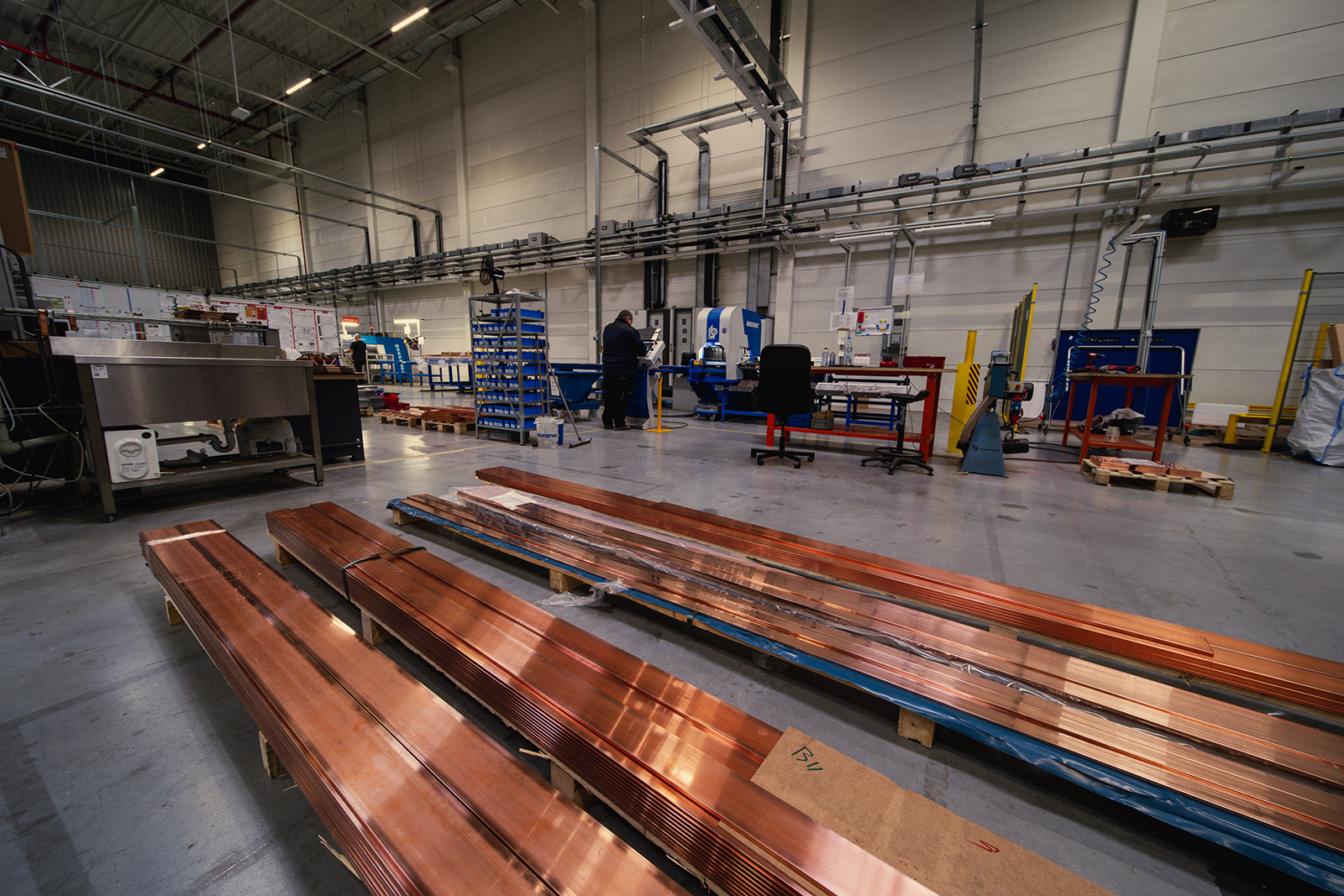
Thermal cycling (repeated heating and cooling as loads vary) subjects busbar connections to mechanical stress through expansion and contraction. Copper's coefficient of thermal expansion closely matches many connection hardware materials, minimising differential expansion that can loosen connections over time. Properly torqued copper connections maintain their integrity through thousands of thermal cycles.
Corrosion resistance matters particularly in data centre environments where cooling systems may introduce humidity or where coastal locations expose equipment to salt-laden air. Copper naturally forms a protective oxide layer that inhibits further corrosion, maintaining electrical conductivity even in challenging environments. Optional surface treatments (tin, silver, or nickel plating) provide additional protection where conditions warrant.
Design considerations for data centre busbar systems
Getting the sizing right
Proper busbar sizing begins with accurate assessment of current-carrying requirements. This involves understanding not just the nominal load, but peak demands, future growth projections, and appropriate safety margins. Industry standards including the National Electrical Code (NEC) in the United States and International Electrotechnical Commission (IEC) publications used across Europe and globally provide guidance, but specific data centre applications often require more detailed analysis.
Key factors affecting busbar capacity:
- Conductor cross-sectional area determines base current-carrying capability
- Temperature rise limitations ensure safe operating temperatures for insulation and connections
- Ambient temperature affects heat dissipation effectiveness (higher ambient requires de-rating)
- Installation method (enclosed busbars operate hotter than open-air installations)
- Conductor proximity (multiple busbars running in parallel generate mutual heating)
De-rating factors can significantly reduce capacity from theoretical maximums. Enclosed busbars within cable trunking or conduit require larger cross-sections than open installations to achieve the same current capacity. Each of these variables must be carefully evaluated during the design phase to ensure the final installation performs reliably under actual operating conditions.
Forward-looking design incorporates capacity for future power density increases. Oversizing busbars by 20-30% during initial installation costs relatively little compared to retrofitting larger conductors later. This approach provides flexibility as data centre operations evolve and power requirements increase with new equipment generations.
Conductor geometry options
Busbar geometry significantly impacts both electrical and thermal performance. The most common configurations in data centre applications include flat rectangular bars and tubular conductors, each offering distinct advantages.
Flat bar busbars provide maximum flexibility in arrangement and connection. Multiple flat bars can be stacked or arranged side-by-side to achieve required current capacity while maintaining compact cross-sections. The high surface area relative to cross-sectional area promotes effective heat dissipation through natural convection. Flat bars also simplify drilling and tapping for connection hardware at any point along the length.
Tubular busbars excel in applications requiring maximum current capacity with minimal weight. The geometry provides superior strength for long unsupported spans while offering excellent heat dissipation through both inner and outer surfaces. However, making connections to tubular busbars requires more specialised hardware and installation procedures.
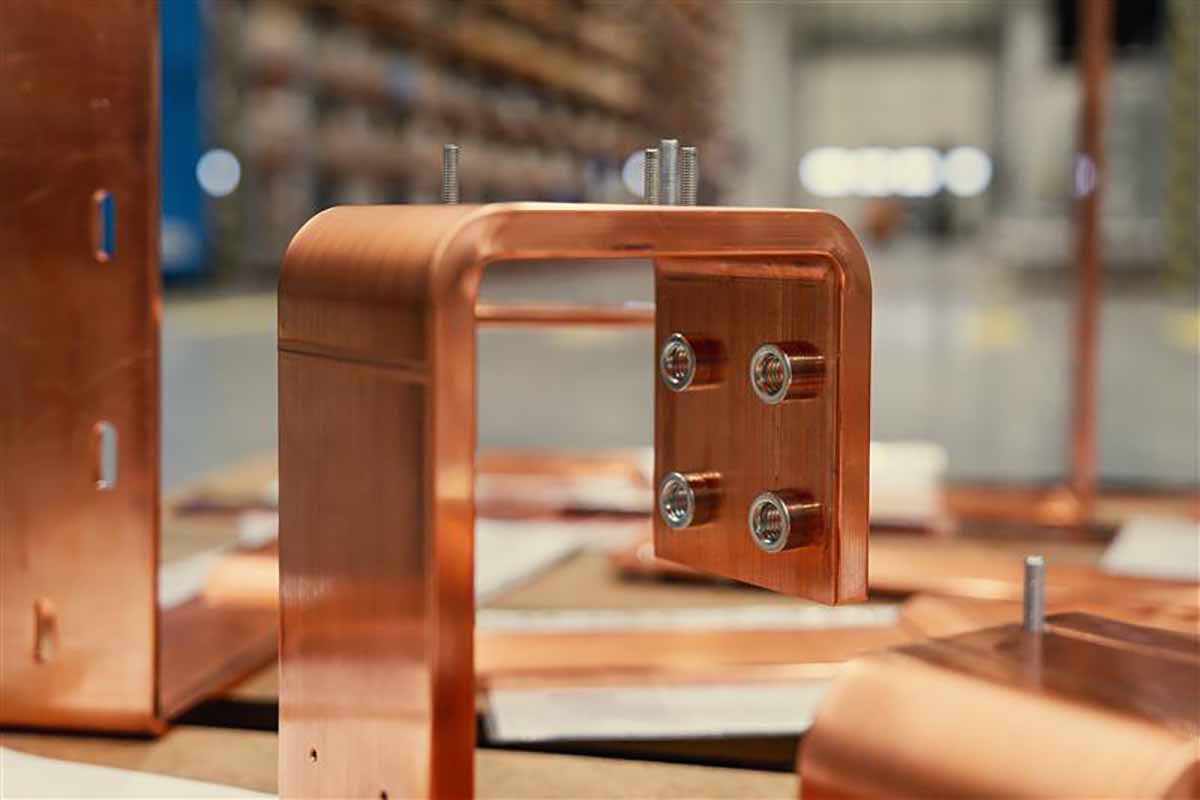
Flexible busbar sections accommodate movement between fixed mounting points, compensating for thermal expansion, seismic activity, or building settlement. These specialised components combine thin copper layers with insulation, providing flexibility while maintaining current-carrying capacity and electrical isolation.
Connection integrity: the critical detail
Busbar connections represent potential failure points requiring careful design and installation. Poor connections create high-resistance points that generate excessive heat, potentially leading to failures that compromise entire distribution systems.
Bolted connections remain the standard approach for data centre busbar systems, providing reliable electrical contact while allowing disassembly for maintenance or reconfiguration. Proper bolted connection design specifies appropriate bolt materials, torque values, and hardware configurations that ensure consistent contact pressure across joint surfaces.
Contact surface preparation significantly impacts connection performance. Surfaces must be clean, flat, and free from oxides or contaminants that increase resistance. Copper connections often employ joint compound or contact grease to displace air and moisture while maintaining long-term conductivity. Surface plating (typically tin, silver, or nickel) provides additional protection against oxidation and facilitates easier connection assembly.
Torque specifications require precise compliance during installation. Under-torqued connections may develop high resistance as surfaces separate slightly, while over-torqued connections can damage hardware or deform conductors. MSS International provides detailed torque specifications for all busbar connections, based on hardware size, material, and conductor configuration.
Thermal analysis: keeping systems cool
Heat generation in busbar systems requires careful management. A 2000A busbar with 0.05 milliohms resistance per meter generates 200W per meter of heat. In a 100-meter busbar run, that's 20kW of continuous heat generation requiring dissipation to maintain safe operating temperatures.
Natural convection provides the primary heat dissipation mechanism for most busbar installations. As busbars heat up, surrounding air warms and rises, drawing cooler air into contact with conductor surfaces. The effectiveness depends on busbar surface area, orientation (vertical surfaces cool more effectively than horizontal), and surrounding air temperature.
MSS International's simulation approach
Modern busbar design benefits from advanced analysis to predict thermal behaviour before manufacturing begins. At MSS International, our busbar systems are validated through advanced heat and electrical resistance simulations, ensuring optimal performance and safety before production.
This validation approach enables us to identify potential issues early in the design process, ensuring configurations meet performance requirements while minimising material use and installation space. By predicting operating characteristics, we ensure designs maintain safe operation under demanding conditions.
Integration with facility cooling
Busbar thermal loads must integrate with facility cooling design to avoid creating hot spots or overloading HVAC systems. While busbars typically generate far less heat than IT equipment per watt of power delivered, their strategic location (often overhead or under floors) requires coordination with air distribution patterns.
Hot aisle/cold aisle containment strategies common in modern data centres impact busbar installation locations and cooling effectiveness. Busbar runs located in hot aisles benefit from elevated air temperatures for heat dissipation while avoiding thermal impact on cold aisle temperatures that directly affect IT equipment cooling.
Thermal monitoring systems provide ongoing verification of busbar performance during operation. Temperature sensors at high-load connection points alert operators to developing issues before they impact reliability. Many modern data centres incorporate thermal imaging inspections during preventive maintenance cycles, identifying hot spots that might indicate loose connections or unexpected load conditions.
MSS International's manufacturing excellence
Superior busbar performance begins with material quality. At MSS International, we source ETP copper from certified suppliers who provide comprehensive material certifications documenting purity, conductivity, and mechanical properties. Each copper delivery undergoes verification testing before entering production, confirming conductivity through standardized testing procedures.
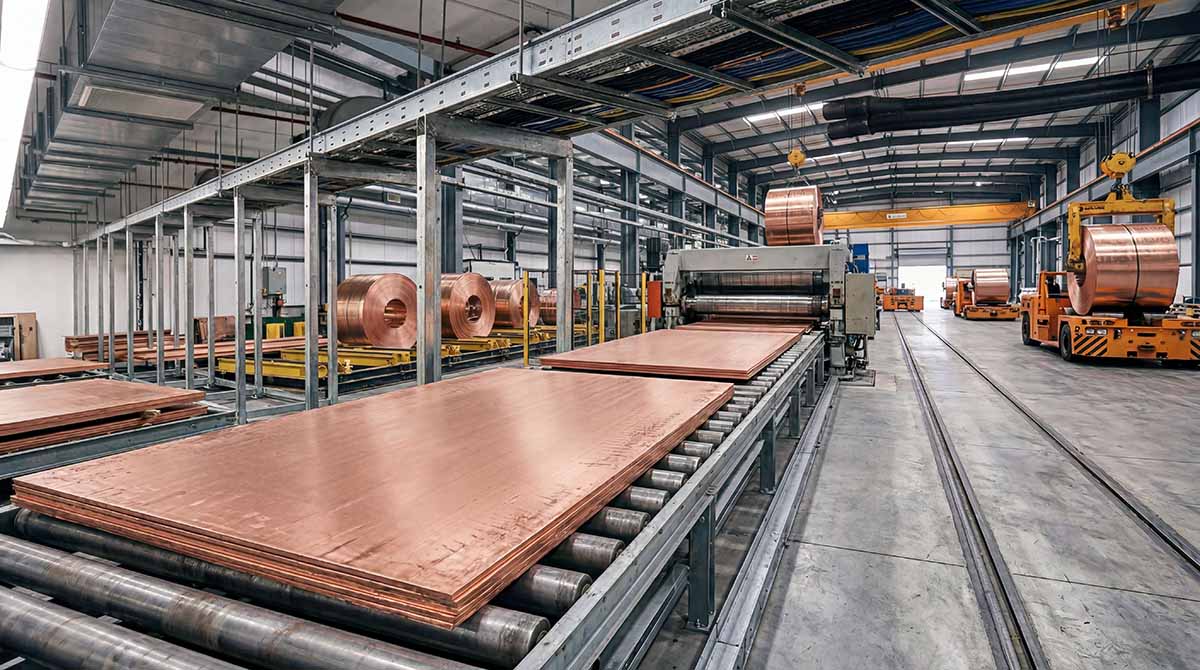
Our commitment to sustainability drives continuous efforts to increase recycled copper content in our manufacturing. Working closely with copper refiners, we maximize recycled material use while maintaining the purity standards that electrical applications demand. Copper can be recycled indefinitely without performance degradation, making this approach both environmentally responsible and economically sound.
Precision manufacturing processes
Busbar fabrication demands precision machining and forming operations that maintain dimensional accuracy while avoiding surface damage or contamination that could impact electrical performance. Our CNC machining capabilities produce complex busbar geometries with tight tolerances critical for proper fit and electrical contact. Multi-axis machining centres execute drilling, milling, and profiling operations that create connection points, mounting holes, and custom shapes specific to each installation.
Forming operations shape flat copper stock into required profiles, whether simple bends for routing around obstacles or complex configurations that optimise space utilisation. Our precision press brakes and forming tools consistently produce accurate bends while avoiding work hardening or surface damage that might reduce conductivity or create stress concentration points.
Surface treatments provide additional protection and facilitate easier connection assembly. Tin plating remains the most common treatment, providing excellent corrosion resistance and ease of connection while minimising galvanic corrosion concerns when joining copper to other metals. Silver plating offers the lowest contact resistance for the most demanding applications, while nickel provides superior environmental protection for harsh conditions.
Custom engineering capabilities
Standard busbar configurations serve many applications effectively, but data centre infrastructure often requires custom designs tailored to specific architectural, electrical, and operational requirements. MSS International's engineering team collaborates closely with customers from initial concept through final installation.
Our design process begins with thorough requirements analysis. We need to understand not just electrical specifications (current capacity, voltage, phasing) but also installation environment (available space, routing paths, connection points), future expansion plans, and any special constraints (seismic requirements, specific standards compliance, integration with existing infrastructure).
Computer-aided design (CAD) tools enable rapid design iteration and visualisation. We create detailed 3D models showing how busbar assemblies integrate with surrounding infrastructure, identifying potential interferences before manufacturing begins. These models facilitate customer review and approval while providing comprehensive manufacturing documentation.
Testing and certification
Comprehensive testing verifies busbar performance and ensures reliability before shipment. Our test protocols validate both electrical performance and mechanical integrity:
- Four-wire resistance measurements confirm conductivity and verify material quality
- Thermal cycling tests subject assemblies to repeated heating and cooling cycles simulating years of operational load variations
- Mechanical load testing validates structural capability for installation and operational stresses
- High-potential (hipot) testing verifies insulation systems withstand voltage stresses significantly above operating levels
Our quality management systems, certified to ISO 9001 and IATF 16949, document all testing and validation results. Comprehensive certification packages accompany each busbar shipment, providing customers with complete traceability and confidence in product quality.
Installation and long-term maintenance
Getting installation right
Successful busbar installation requires attention to critical details that significantly impact long-term reliability. Accurate alignment ensures busbar runs mount securely and mate properly at connection points. Mounting hardware positions busbars at specified locations with appropriate spacing from other conductors and grounded surfaces.
Connection assembly demands particular care. Contact surfaces must be clean and properly prepared according to specifications. Joint compounds or contact grease should be applied as recommended. Hardware assembly follows specified sequences, particularly for stacked or multi-bolt connections where uneven tightening might create stress concentrations.
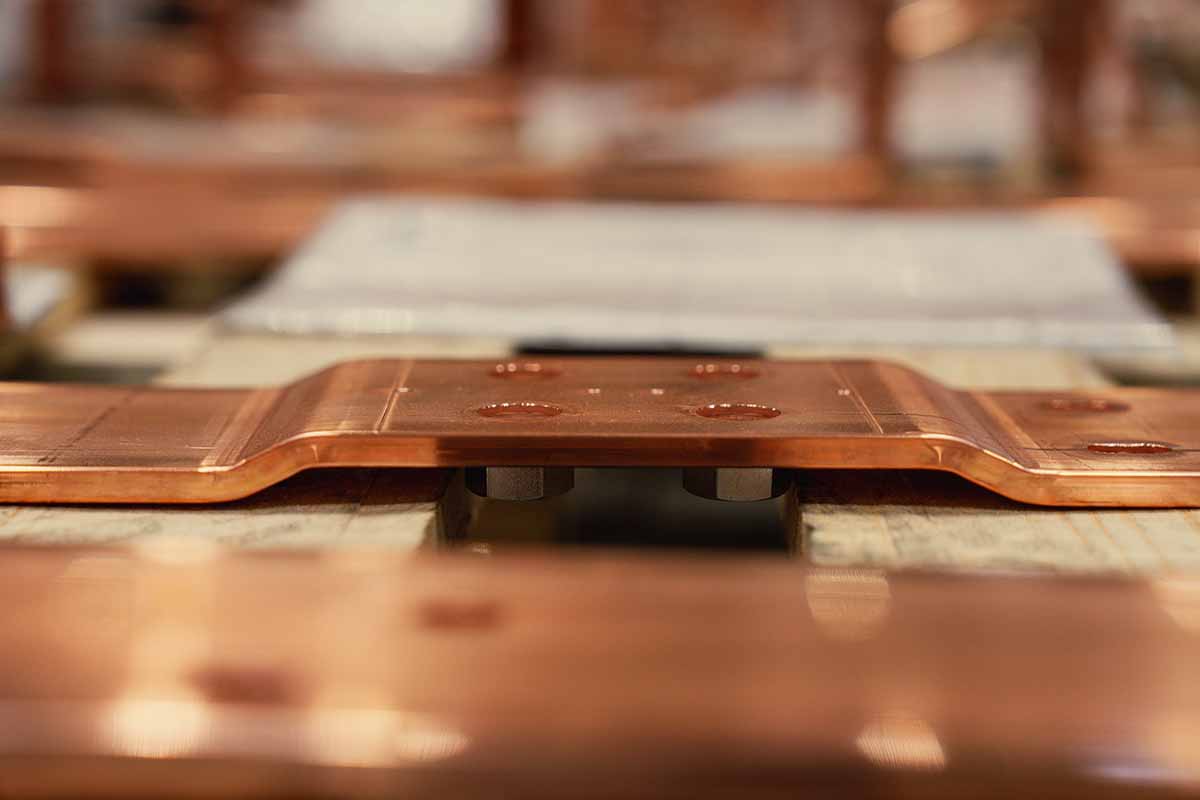
Torque application to connection hardware critically impacts performance. Under-torqued connections may develop high resistance as contact pressure proves inadequate. Over-torqued connections risk damaging hardware or deforming busbars. Calibrated torque tools applied according to specifications ensure consistent, appropriate connection forces. Torque values should be verified after initial tightening and again after several hours as materials settle.
Verification testing confirms installation quality before energization. Insulation resistance (megohm) testing detects any insulation damage or contamination. Continuity testing verifies all connections provide low-resistance electrical paths. These tests provide confidence the installation meets electrical safety standards before applying power.
Long-term maintenance
While properly installed copper busbar systems require minimal maintenance compared to cable distribution, periodic inspection and maintenance activities ensure continued reliable performance over their long service life.
Thermal imaging provides powerful non-invasive inspection capability. Infrared cameras detect hot spots indicating loose connections, unbalanced loads, or unexpected resistance. Many developing problems reveal themselves through elevated temperatures long before causing failures. Thermal imaging should be performed under representative load conditions when temperature differences are most apparent.
Connection re-torquing may be required after several years of service, particularly for high-current installations subject to significant thermal cycling. While proper initial installation minimises this requirement, verification and adjustment of connection torque provides additional assurance.
Documentation of maintenance activities and findings supports ongoing reliability. Thermal imaging results tracked over time reveal trends that might indicate developing issues. Maintenance records inform future facility planning and provide valuable operating history supporting lifecycle management decisions.
Economic value beyond initial cost
Busbar systems typically require higher initial investment compared to traditional cable distribution, reflecting material costs for copper conductor and engineering for custom designs. However, comprehensive economic analysis must consider lifecycle value, not just initial expenditure.
Installation and energy savings
Installation cost comparisons favour busbars in high-density applications. While busbar material costs exceed cable alternatives, installation labour savings can be substantial. A busbar run replaces dozens or hundreds of individual cable pulls, dramatically reducing installation time and labour. This becomes particularly significant in occupied facilities where work must occur during limited maintenance windows.
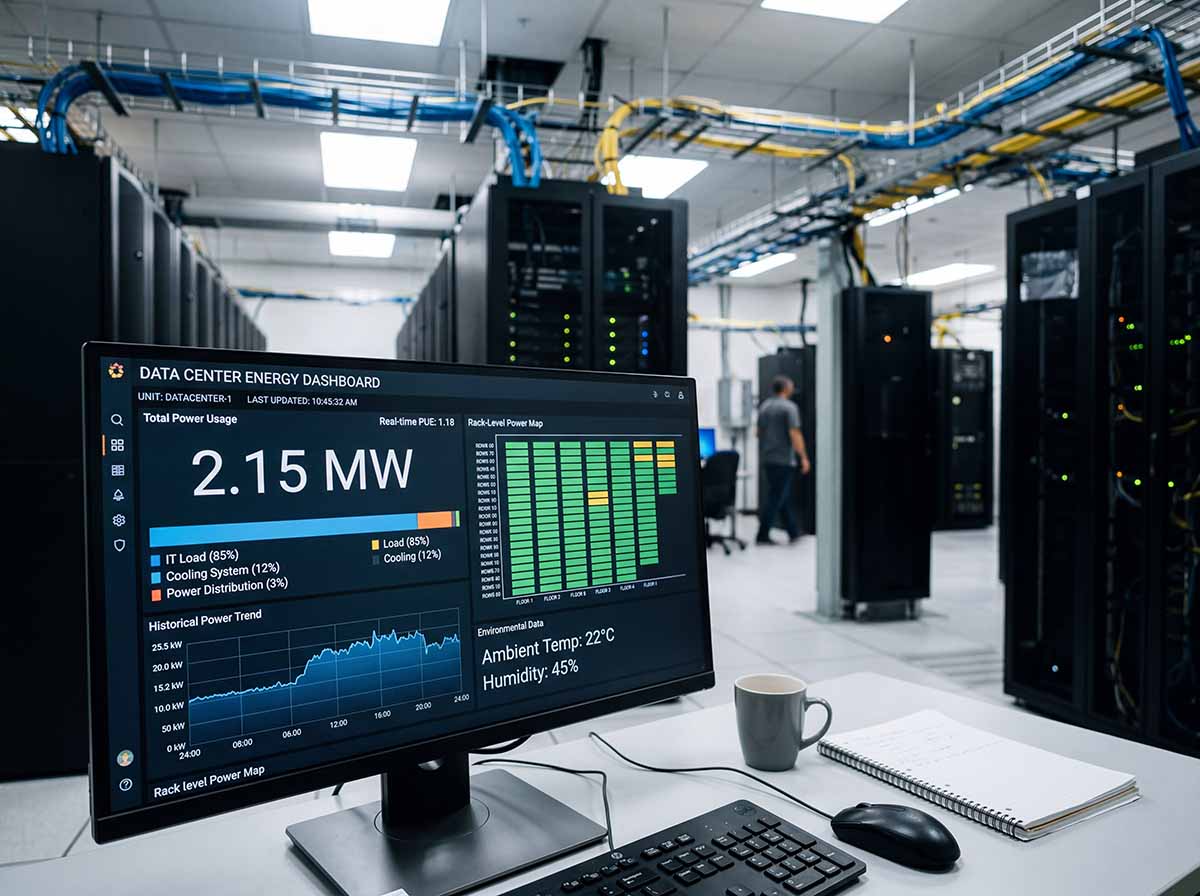
Energy efficiency benefits accumulate over facility lifetime. As discussed earlier, copper busbars minimise I²R losses, reducing power consumption compared to cable alternatives. In a hypothetical 100MW data centre scenario, a 0.5% distribution loss reduction would save 500kW continuously. Over 20 years at $0.10/kWh, these savings would exceed $8.7 million, far exceeding any initial cost premium for copper busbars.
Reduced maintenance costs reflect busbar reliability and longevity. Cable systems often require periodic replacement of individual conductors as insulation ages or connections degrade. Busbar systems, properly installed and maintained, operate reliably for decades without component replacement. This avoided maintenance reduces both direct costs and operational disruption.
Circular economy benefits
Copper's high scrap value and recyclability provide end-of-life economic benefits while supporting environmental objectives. When busbar systems reach the end of their service life, or when facility decommissioning occurs, copper conductors retain substantial value.
At MSS International, we've developed comprehensive scrap purchase services supporting this circular economy approach. We purchase retired copper components and replacement parts removed during maintenance operations. These materials enter our recycling stream, are processed back to high-purity copper, and return to production for new components.
This closed-loop system benefits multiple stakeholders. Data centre operators recover value from decommissioned equipment, offsetting replacement costs or facility upgrades. The environmental benefits extend beyond simple resource conservation. Recycled copper production requires approximately 85% less energy than primary production from ore, substantially reducing carbon footprint. Each tonne of recycled copper avoids approximately 2.5 tonnes of CO2 emissions compared to virgin material.
Contact MSS International to discuss how our scrap purchase programme can add value to your data centre operations while supporting sustainable practices.
Future-proofing with modular busbar systems
Data centre power requirements rarely remain static. Equipment upgrades, changing workloads, and evolving business requirements drive power density increases over facility lifetime. Busbar systems excel at accommodating these changes through modular, scalable design approaches.
Tap-off flexibility enables power access where needed without major infrastructure modifications. Unlike fixed cable terminations, busbar tap boxes can be added at any point along a busbar run. This allows operators to respond to changing rack layouts or power requirements without extensive rewiring.
Capacity planning for future density increases costs relatively little during initial installation. Oversizing busbars by 25-50% above initial requirements provides substantial growth capacity. The incremental copper cost is modest compared to retrofit expenses years later. This approach provides flexibility to support unexpected opportunities or requirements without infrastructure limitations constraining business decisions.
The data centre industry continues rapid evolution, with emerging technologies creating new infrastructure requirements. Liquid cooling systems, increasingly necessary for highest-density AI applications, require different power distribution approaches. Busbar systems adapt readily to liquid-cooled environments, providing power distribution that integrates with cooling infrastructure.
Conclusion: engineering excellence in power distribution
Modern data centre power distribution demands more than simply connecting power sources to loads. The unprecedented power densities required by AI workloads, the uncompromising reliability standards of mission-critical operations, and the need for flexible, scalable infrastructure all point toward copper busbar systems as the superior solution.
Copper busbars deliver unmatched electrical performance through superior conductivity that minimises losses and ensures voltage stability throughout facilities. Their thermal management capabilities handle high-current loads safely while integrating with cooling infrastructure. The mechanical reliability and longevity of properly engineered copper busbar systems provide decades of maintenance-free service, supporting the long-term investments that data centre operations represent.
At MSS International, our comprehensive approach to busbar manufacturing encompasses material quality, precision fabrication, engineering analysis, and quality assurance that ensures reliable performance. Our experience serving demanding electrical distribution applications globally translates directly into expertise supporting data centre infrastructure requirements.
From initial design through installation support and lifecycle service, MSS International provides the technical depth and manufacturing capability that data centre copper busbar systems demand. Our commitment to sustainable manufacturing practices, including maximizing recycled copper content and offering scrap purchase services, aligns economic and environmental objectives while supporting the circular economy.
Ready to optimize your data centre power distribution with precision-engineered copper busbar systems? Contact MSS International today to discuss how our engineering expertise and manufacturing capabilities can support your facility's current needs and future growth.
For a comprehensive overview of copper's role across all data centre systems, see our article on copper in data centre infrastructure.
Frequently Asked Questions
Can existing cable distribution be upgraded to busbar systems?
Yes, many facilities successfully retrofit busbar systems into existing cable distribution infrastructure. The feasibility and approach depend on available space, existing infrastructure capacity, shutdown windows, and budget. Phased implementation often works well, upgrading sections progressively as maintenance windows and budgets allow.
How do you calculate the correct busbar size for a data centre?
Busbar sizing considers multiple factors: required current capacity (including future growth), voltage drop limitations, ambient temperature, installation method (enclosed vs. open), proximity to other conductors, and applicable electrical codes. MSS International's engineering team assists customers with sizing analysis specific to their facility requirements.
How does busbar efficiency compare to traditional cabling?
Copper busbars typically achieve 0.5-1% better efficiency than equivalent cable installations due to lower resistance per unit length and reduced connection points. In large data centres, this efficiency advantage translates to substantial energy cost savings over the facility's operational lifetime.
What is the typical lifespan of copper busbars in data centres?
Properly installed and maintained copper busbar systems typically provide 25-30 years of reliable service in data centre environments. The corrosion resistance of copper, stability of properly torqued connections, and absence of degradable insulation in many busbar designs contribute to this longevity.
What maintenance do copper busbars require?
Copper busbars require minimal maintenance compared to cable systems. Recommended activities include annual thermal imaging inspections to detect hot spots, periodic visual inspection of connections and insulation, and potential re-torquing of connections after several years of service in high-thermal-cycling applications.